What3Words Maps Application is Redefining Global Navigation
- Venkatakrishnan Ramarajan
- 10 hours ago
- 4 min read

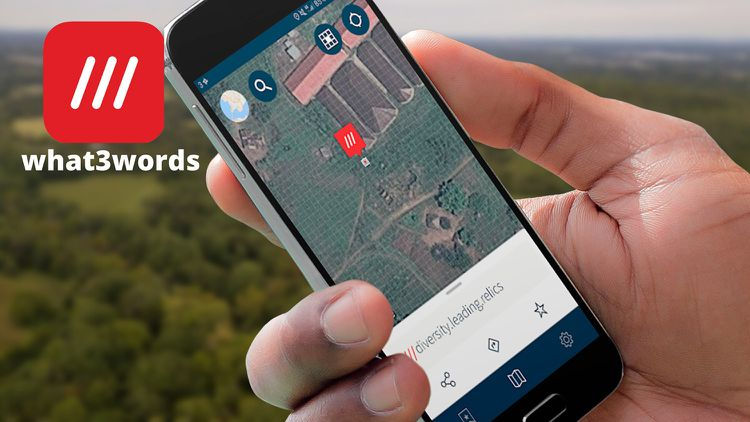
We’ve all been there: frantically explaining to a food delivery driver that you’re at the "side entrance near the green dumpster, not the main lobby," or trying to meet a friend in the middle of a massive, nameless park.
Traditional street addresses are old, messy, and surprisingly broken. They can be duplicated (there are 14 different Church Roads in London alone!), they drop pins right in the dead-center of a building rather than at the door, and for nearly 4 billion people globally, they simply don’t exist.
what3words, a company that decided to fix global mapping not by adding more numbers, but by opening a dictionary. Here is a deep dive into how this technology works, its feature set, and how businesses are using it commercially to save millions.
How It Works: Shifting from Grids to Words
The premise of what3words is beautifully straightforward. The creators divided the entire surface of the Earth into a grid of 3-meter by 3-meter squares (roughly 10 feet by 10 feet). That totals a staggering 57 trillion squares.
Instead of assigning each square a long, frustrating string of GPS coordinates like 40.748817,−73.985428, they assigned every single square a unique, permanent combination of three simple words.
For example, if you want to find the exact front door of what3words' London headquarters, you don't look for a building number. You just type in:
///filled.count.soap

Complete Feature Breakdown: What Can the What3Words App Do?
While the core concept is just three words, the app and enterprise system are packed with features designed to bridge the gap between human language and digital mapping.
100% Offline Functionality (Compass Mode): Because the mathematical algorithm that converts words to coordinates is hardcoded into the app (taking up just a few megabytes), you can find your current 3-word address and navigate to another one without any cell signal or data connection.
AutoSuggest Error-Correction: To prevent mistakes from typos or regional accents, the search bar uses smart text prediction. It recognizes if you misspelled a word and prioritizes suggestions closest to your current geographic area.
AI Chat & Voice Chat Integration: The modern platform features native conversational AI. You can talk directly to the search tool using natural phrasing or interact with what3words AI directly inside WhatsApp to pull locations out of plain text.
Multilingual Support: The grid is localized in over 60 languages. A square in Tokyo has an English 3-word address for tourists and a completely distinct Japanese 3-word address for locals, they aren't literal translations, but linguistically optimized words for that region.
Enhanced Scan & File Import (Pro Feature): Users can scan multiple printed 3-word addresses at once using their phone's camera, or upload a CSV/PDF file to instantly extract listed locations and batch-convert them into map routes.
Photo Mode: This lets you overlay a precise 3-word address badge directly onto a photograph, making it easy to catalog an exact asset location or remember where a travel photo was taken.
Commercial & Enterprise Usage: Monetizing Precision
While the app is free for casual users and emergency services, what3words charges businesses that benefit commercially from its infrastructure. By integrating the what3words API and Mobile SDKs directly into their own software, enterprise companies are solving expensive logistical nightmares.
1. E-Commerce Checkout Integration
Every time a delivery driver calls saying, "I can't find your building," it costs a retailer money. E-commerce platforms plug the what3words API directly into their checkout pages.
Instead of a generic street line, a field prompts the customer: "Find your exact 3m delivery square." This captures the exact drop-off spot—like a specific side alley or backyard gate—reducing failed "last-mile" deliveries and increasing customer satisfaction scores.
2. High-Volume Logistics & Ride-Hailing
For massive courier fleets (like Aramex and DTDC) and ride-hailing services, drivers waste hours navigating massive business parks, apartment complexes, or sprawling stadiums. Tech integrations allow taxi apps to map pick-ups directly to specific pillars or venue entrances. Furthermore, logistics companies use high-performance server integrations to convert millions of 3-word addresses into raw coordinates in milliseconds, streamlining automated route planning.
3. Automotive Embedded Navigation
Major automakers like Mercedes-Benz, Jaguar Land Rover, and Subaru build what3words directly into their vehicle infotainment screens. Drivers don't have to fiddle with typing confusing street names while driving; they simply use voice commands to say three words, and the native dashboard navigation maps a direct route.
4. Infrastructure & Asset Management
Utility companies, telecom providers, and energy sectors manage millions of offshore or rural assets like wind turbines, power lines, and water valves. Because these assets don't have street addresses, field workers use what3words to log exact maintenance sites, ensuring that contractors sent out months later can find the exact piece of equipment in an open field.

Real-World Applications
Sector | Primary Problem | what3words Fix |
Emergency Ops | Vague locations in remote zones | Pinpoint rescue within 3 meters |
E-Commerce | Missed drops & "last-mile" loss | Exact loading dock/door pins |
Automotive | Clunky voice-command addresses | Instant, hands-free navigation |
Infrastructure | Unmapped rural assets | Seamless maintenance tracking |
Looking Ahead: The Future of Pinpoint Location
As voice-activated tech, automated drone deliveries, and AI assistants become native to our everyday lives, traditional addresses are becoming a relic of the past. what3words bridges the gap between chaotic human communication and rigid digital coordinates. The next time you find yourself stuck at a massive stadium trying to explain to an Uber driver which pillar you're standing next to, remember: the entire world has already been mapped out for you. You just need to know your three words.
Comments